AI-Driven Autonomous Convoy:
Leader–Follower Technology
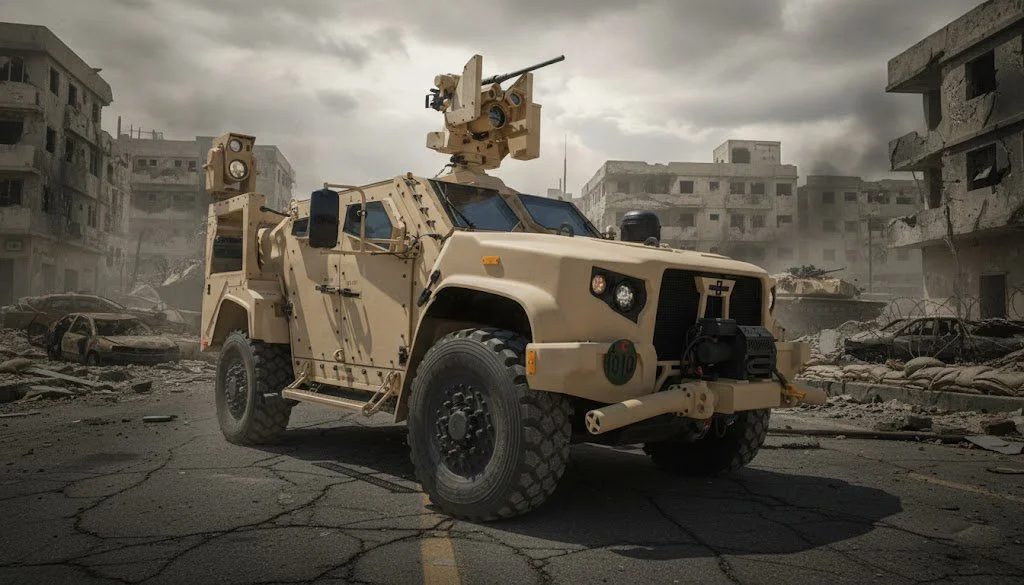
A conceptual AI-driven autonomous convoy system designed to improve safety and efficiency in high-risk mobility operations. It explores the problem space, key users, requirements, and potential opportunities through a product management lens.
Use Case
Military Convoy Operations
Author
Goni Kim
Industry
Defense
Written
12/01/2025
Overview
Problem Space
Users & Stakeholders
Short Summary
This project explores a conceptual AI-driven autonomous convoy system aimed at improving safety and efficiency in high-risk mobility operations.
Project Objective
To identify user needs, examine operational challenges, and evaluate how autonomous driving technologies could reduce risk, optimize resources, and enhance convoy performance.
Research Scope
This research covers problem analysis, user and stakeholder mapping, scenario exploration, technology evaluation, and early product opportunity discovery from a product management perspective.
Current Problem
Convoy operations in high-risk environments expose drivers and support personnel to significant threats, such as IEDs, ambushes, and hazardous terrain, while also requiring substantial manpower to execute safely.
Limitations of the Current System
Today’s convoys rely heavily on human drivers, lack real-time autonomous support, and depend on manual coordination, resulting in higher risk, limited scalability, and operational inefficiencies.
Why This Matters Now
Increasing mission tempo, manpower constraints, and rising operational threats highlight the need for safer, more efficient mobility solutions. Emerging autonomous technologies present a timely opportunity to reduce exposure and improve convoy resilience.
Primary Users
Vehicle Drivers – responsible for operating vehicles in hazardous environments.
Convoy Commanders – oversee movement, safety, and coordination during missions.
Pain Points:
High exposure to threats, heavy cognitive load, limited situational awareness, and high stress during complex or hostile operations.
Secondary Users
Maintenance Teams – ensure vehicle systems and sensors remain mission-ready.
Logistics Officers – plan routes, manage resources, and coordinate convoy schedules.
Pain Points:
Frequent vehicle downtime, complex maintenance for aging fleets, limited data for decision-making, and high planning overhead.
Goals and Success Metrics
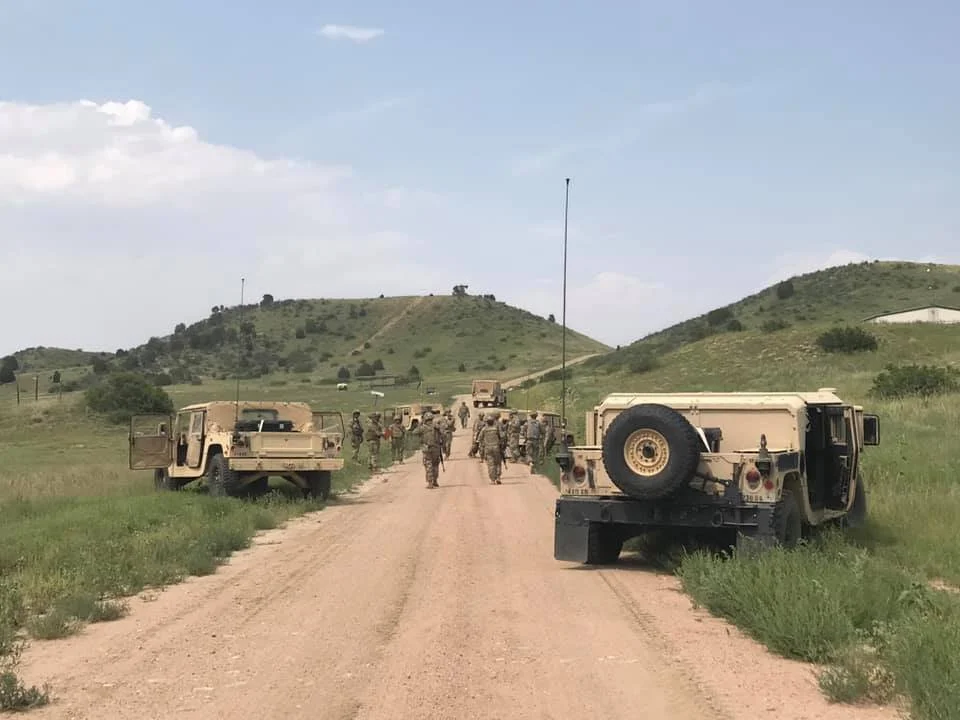
SWOT Analysis
Goals
Enhance Safety: Reduce risk to human drivers in high-threat environments. Even if a driver is KIA or incapacitated, the convoy can continue its mission safely.
Reduce Manpower Requirements: Minimize the number of personnel needed to operate and monitor convoys, optimizing human resource allocation.
Increase Efficiency & Uptime: Improve convoy operational tempo, decrease downtime, and enable faster mission completion.
Success Metrics
Mission Continuity Rate: Percentage of missions completed without interruption despite driver unavailability.
Risk Reduction: Decrease in exposure to threats for personnel (e.g., KIA/near-miss incidents).
Operational Efficiency: Time saved per convoy mission, convoy speed improvements, and reduced human resource hours per operation.
Vehicle Uptime: Percentage increase in vehicles ready for deployment due to autonomous operation support.
Lean Canvas
Unique Value Proposition
Enable safer, more efficient convoy operations in high-risk environments by combining AI-driven leader–follower autonomy with full vehicle self-driving capabilities, reducing human exposure and optimizing resource use.
High-Level Concept
“Autonomous convoys that can operate in hazardous zones with minimal human oversight, ensuring mission continuity and improved operational efficiency.”
Unfair Advantage
Proprietary AI convoy algorithms for multi-vehicle coordination
Integration of real-time vehicle and environmental data
Scenario-tested autonomous navigation for military logistics
Channels
Military R&D and testing programs
Partnerships with defense contractors (e.g., Oshkosh, Lockheed)
Pilot deployments in controlled training and logistics exercises
Customer Segments
Military logistics departments
Convoy commanders and operational units
Defense technology integrators
Early Adopters
Forward-operating units in high-risk theaters
Military bases testing autonomous resupply solutions
Defense contractors developing next-gen mobility platforms
Cost Structure
AI R&D and algorithm development
Vehicle sensor and communication hardware
Maintenance, updates, and software retraining
Pilot deployment and testing costs
Revenue Stream
Government defense contracts
Integration services with existing vehicle fleets
Licensing of AI convoy technology to defense contractors

Proposed Solution
AI-Driven Convoy Autonomy
FSD‑Like Individual Vehicle Autonomy
How It Works (High-Level)
Core Features
Develop a multi-vehicle autonomy system that enables convoys to operate with minimal human intervention in high‑risk environments. The system processes battlefield variables—enemy weapon signatures, friendly force status at the company/squad level, vehicle health, and terrain constraints—to generate real‑time tactical recommendations.
Convoy commanders and squad leaders receive prioritized alerts and suggested actions based on each vehicle’s location and condition, while headquarters receives continuous status updates for faster, more informed support.
The platform is designed to scale across the broader soldier technology ecosystem, integrating with wearable devices (e.g., smart goggles, AR headsets) to display troop vitals, vehicle diagnostics, and convoy status directly in a commander’s view.
Introduce full self‑driving capabilities for individual vehicles within the convoy to support operations that demand rapid mobility under threat. Unmanned transport vehicles can extract squads from ambushes, reinforce small engagements, or deliver supplies without exposing a driver to risk.
Because the cabin no longer requires a dedicated operator, interior space can be repurposed for personnel or equipment, improving mission flexibility. If autonomous systems fail or the tactical situation requires manual control, the vehicle automatically transitions to a human-operated mode to ensure mission continuity.
Perception & Analysis: Sensors and onboard AI interpret battlefield conditions, vehicle status, and environmental data.
Decision Layer: Autonomy models determine optimal convoy formation, route adjustments, and threat responses.
Commander Interface: Recommendations and alerts are delivered through integrated displays or wearable AR systems.
Operational Flexibility: Vehicles switch dynamically between autonomous, leader–follower, and manual modes depending on mission demands.
Epic 1: Convoy Coordination & Navigation
Features:
AI-Led Mission Navigation: Vehicles autonomously follow preloaded mission plans and dynamic route protocols.
Real-Time Vehicle-to-Vehicle & HQ Communication: Continuous status and threat updates between vehicles and headquarters, enabling coordinated adjustments and virtual driver support.
Epic 2: Autonomous Driving & Safety
Features:
Autonomous Obstacle & Threat Response: Vehicles detect and react to hazards automatically.
Modular AI Driving Modes: Supports fully autonomous, remote-assisted, or manual (via HQ intervention) operation.
Safety Protocols & Fallback Behaviors: Ensures mission continuity and occupant safety even if AI encounters an unexpected scenario.
Assumption & Constraints
Risks & Mitigations
Future Opportunities
Assumptions
Vehicles operate in environments with predictable terrain data and map availability.
AI systems can reliably process sensor inputs and maintain convoy coordination under typical mission conditions.
Headquarters maintains continuous communication and can provide remote assistance if needed.
Constraints
Environmental: Extreme terrain, weather conditions, and electromagnetic interference may impact sensor performance and vehicle autonomy.
Hardware: Vehicles are limited by onboard processing power, sensor range, battery/fuel capacity, and payload restrictions.
Regulatory / Policy: Military protocols, safety regulations, and operational rules may restrict autonomous operations or require human override.
AI Misclassification: Incorrect identification of obstacles or threats could compromise safety.
Mitigation: Use multi-sensor fusion, continuous model retraining, and scenario-based validation to improve accuracy.
GPS / Communication Loss: Loss of positioning or data links may disrupt convoy coordination.
Mitigation: Implement redundant communication channels, local vehicle autonomy, and predictive navigation algorithms.Cybersecurity Threats: AI systems could be vulnerable to hacking or spoofing.
Mitigation: Apply end-to-end encryption, intrusion detection systems, and secure vehicle-to-vehicle communication protocols.Human Override Transition Failure: In case of AI failure, remote or manual takeover might be delayed or unsuccessful.
Mitigation: Design seamless handover protocols, virtual driver support, and continuous monitoring from headquarters.
Full Autonomous Fleet: Expand the system to operate entire convoys fully autonomously, reducing human involvement and increasing operational flexibility.
Integration with Logistics AI: Connect convoy autonomy with broader logistics management systems to optimize supply chains, route planning, and mission scheduling.
Modular Autonomy Packages: Develop scalable AI modules that can be adapted for other vehicle types, enabling wider adoption across different military and civilian mobility platforms.